From research lab to the world's most valuable private company
OpenAI was founded in 2015 as a non-profit research organisation with the goal of developing AI that benefits humanity. Ten years later the company is valued at an estimated $500 billion and, by some estimates, is the most valuable privately held company in the world. That journey – from non-profit lab to commercial giant – is without precedent in the history of technology.
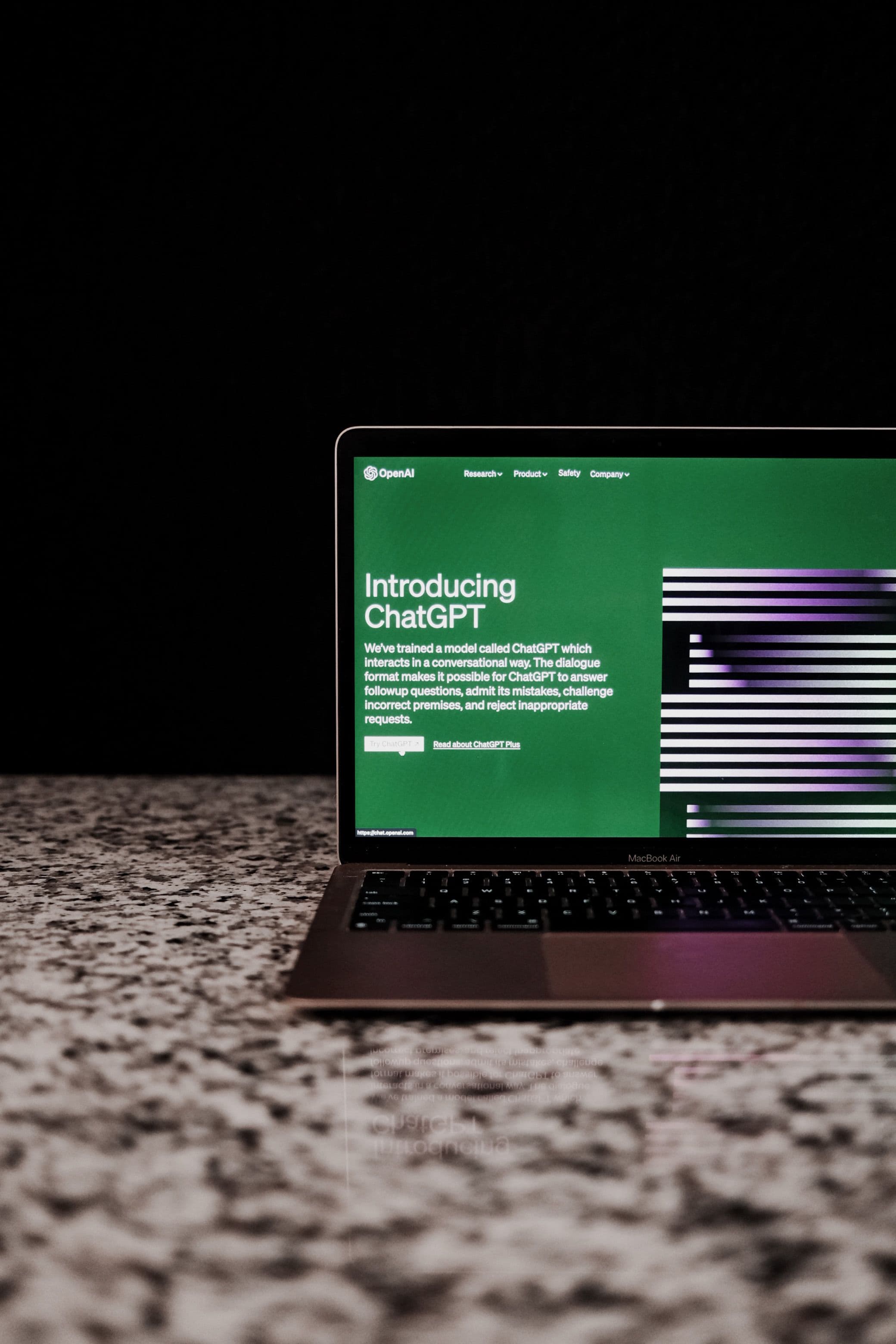
Its flagship product, ChatGPT, launched in November 2022 and reached 100 million users in just two months. By the end of 2025, ChatGPT had over 800 million weekly active users. This rapid adoption has driven revenue growth that outpaces any comparable company.
Financial profile – the fastest growth in tech history
OpenAI's financial trajectory is staggering. The company's annual recurring revenue (ARR) developed as follows: $2 billion at the end of 2023, $6 billion at the end of 2024, and over $20 billion at the end of 2025. That is a tenfold increase in two years – a pace that Google, Facebook and Netflix never achieved.
Revenue comes from three channels. Consumer subscriptions (ChatGPT Plus at $20/month, ChatGPT Pro at $200/month) make up the largest share. Enterprise services (ChatGPT Enterprise and Team) are growing fastest, with 7 million paid workplace seats and over one million paying organisations. API revenue from developers building on OpenAI's models accounts for an estimated 15 percent of the total.
But there is a flip side. OpenAI is estimated to have burned $8.5 billion during 2025. Every dollar of revenue is directly tied to compute – GPU capacity, data centres and energy. OpenAI's CFO Sarah Friar has described the company as being "constantly short of compute" and said that more capacity would immediately translate into higher revenue. The company's Stargate initiative, a collaboration with SoftBank, Oracle and Microsoft, aims to build 10 gigawatts of data-centre capacity for $500 billion over four years.
The competitive landscape – not alone on the throne
OpenAI was first, but is no longer alone. Google's Gemini, Anthropic's Claude and Meta's Llama are challenging on different fronts. OpenAI's share of the enterprise market fell from 50 percent to 34 percent during 2025, while Anthropic doubled its presence from 12 to 24 percent.
In the consumer segment, ChatGPT retains a strong position with 89 percent retention among paying users after one quarter. But there are signs that growth in paying consumers is beginning to plateau in mature markets – a report from Deutsche Bank showed that consumer spending on ChatGPT in Europe nearly stagnated after May 2025.
OpenAI's response is to broaden its product portfolio. The company has added spreadsheet and presentation tools to ChatGPT, launched ChatGPT Go (a cheaper plan for the Indian market) and is investing in AI agents that can carry out complex tasks autonomously.
Corporate structure and IPO
In October 2025, OpenAI carried out a major restructuring, converting its for-profit arm into OpenAI Group PBC (Public Benefit Corporation), while the non-profit foundation – now the OpenAI Foundation – retained control. The foundation holds equity in the for-profit arm valued at roughly $130 billion.
Microsoft's partnership was restructured at the same time, with a $250 billion agreement for Azure cloud services. OpenAI's leadership has hinted that an IPO could take place in late 2026, with a potential valuation of $1 trillion.
What does this mean for investors?
OpenAI is at a critical juncture. Revenue growth is enormous, but so is its cost base. The company needs to prove that it can reach profitability – or at least that the path there is credible. The massive infrastructure investment (the Stargate project) is a bet that demand for AI compute will keep growing for at least 5–10 years.
For investors who believe in this thesis, OpenAI's private shares offer a chance to buy into the world's leading AI company before a possible IPO. The potential upside – if the company goes public at $1 trillion – is significant relative to today's valuation. But the risk that rising costs outpace revenue growth, or that competitors take market share, is real.
How to invest in US private companies via Accumeo
Investments in large US private companies such as SpaceX, OpenAI and Stripe must in practice be made through so-called SPVs (Special Purpose Vehicles). These are separate companies that pool capital from several investors in order to make a single investment in a private company. In the event of an IPO, the SPV's holding is converted into listed shares in accordance with the listing terms.
Just like other early investors, SPVs are generally subject to a lock-up period, often around 180 days. During this period the shares cannot be sold. The exposure, however, remains unchanged. After the lock-up, the manager may choose to sell shares and distribute the proceeds to investors, or distribute shares directly to investors (an in-kind distribution), if the structure allows it. The method is determined by the SPV agreement and the manager's strategy.
There is no way for an individual private person to buy directly onto these companies' cap tables – the SPV structure is the established standard in the US private market.
Not all SPVs are alike, however. In the industry it is common to see fee models that include both a management fee and performance-based compensation (carried interest), often on the order of 2 percent in annual fees and 20 percent of profits – a structure known as "2/20". Some players also stack fees across multiple layers, which can erode returns considerably.
Accumeo sets up and administers its own SPVs for each investment. We are the only platform in Sweden that offers a 0/0 structure: no management fee and no carried interest. You pay only a fee of 5–10% at the time of investment – we take no share of your profit. That means your entire upside accrues to you as the investor.
We structure investments in accordance with applicable regulations, and you get full clarity on what you own, how the structure works and which terms apply.
If you have questions about how it works, you are very welcome to contact us. If you would like to see which investment opportunities are available right now, you can create an account and explore our platform.